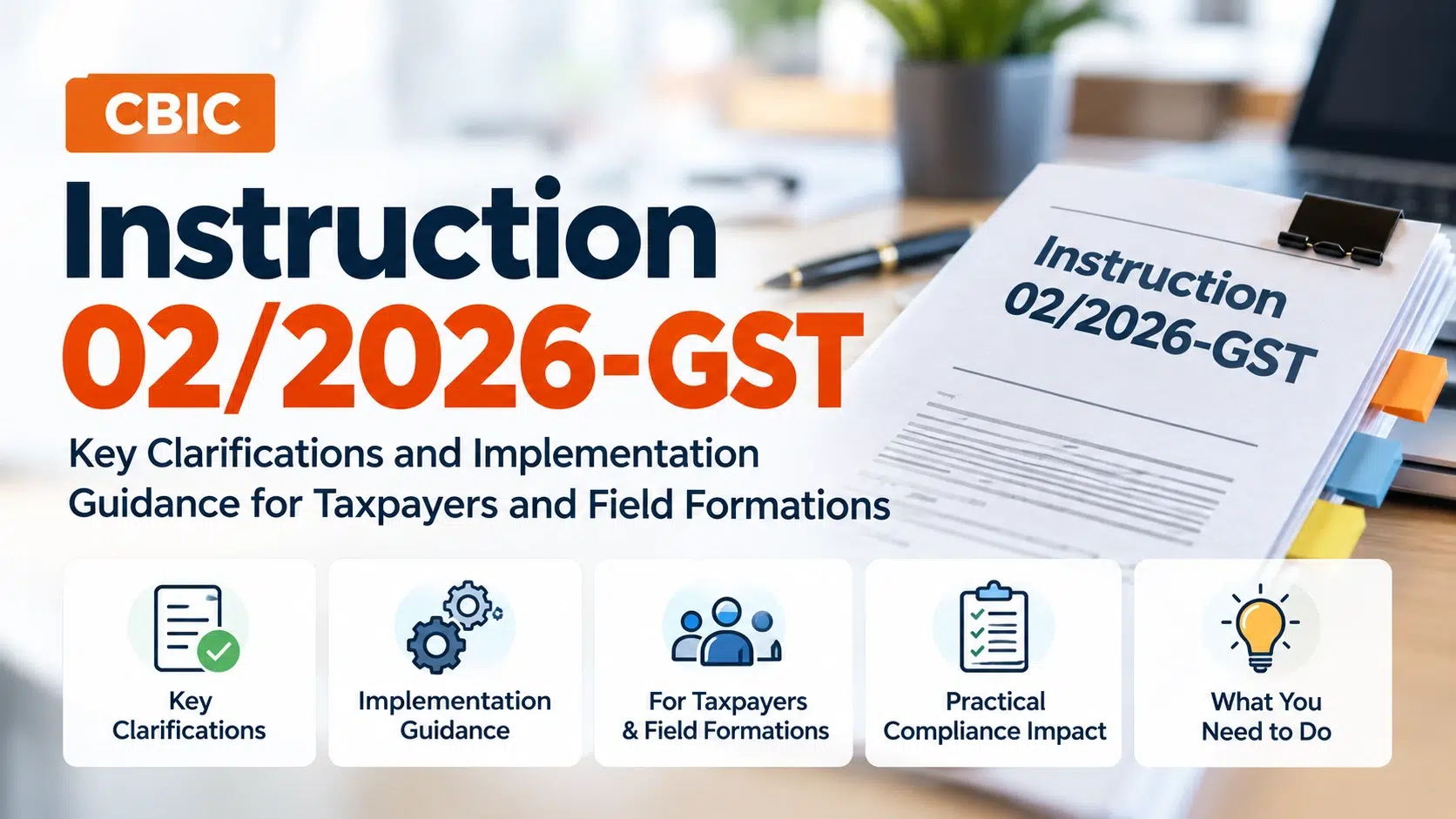
CBIC Instruction 02/2026-GST: Interim Directions on GST Arrests, E-Way Bill Checks and ₹10,000 SCN Threshold
CBIC Instruction No. 02/2026-GST dated 30 October 2026 implements three recommendations of the 57th GST Council on an interim basis for CGST field formations, even though the corresponding amendments to the CGST Act are still pending.
The Instruction covers three high-impact areas: no further arrests by CGST field formations, tighter safeguards for e-way bill interception and verification, and a direction that show cause notices may not be issued where the amount involved is below ₹10,000. The legal distinction between an interim administrative instruction and a statutory amendment is important.
Important Legal Status
This is a CBIC Instruction, not a Circular and not an amendment to the CGST Act. The Instruction itself records that the Council-recommended changes require amendments to the CGST Act and corresponding State GST Acts.
Until those amendments come into force, the Central Government has decided that the specified reforms are to be implemented by CBIC field formations as an interim trade-facilitation measure.
State GST caveat: the Instruction was sent to the GST Council Secretariat for circulation to State GST formations, which may, if deemed appropriate, issue similar instructions within their jurisdictions. Do not assume automatic identical application by every SGST authority unless the relevant State position is confirmed.
Quick Answer
- Arrests: all CGST field formations are directed that no further arrests may be carried out under GST pending the recommended omission of section 69.
- E-way bill checks: interception is to be intelligence-based, authorised at Joint Commissioner level or above with written reasons, and subject to jurisdictional safeguards and specific exceptions.
- ₹10,000 SCN threshold: CGST field formations are directed that SCNs may not be issued where the amount involved is below ₹10,000, taking the sum of CGST, SGST/UTGST, IGST and Compensation Cess.
1. Why CBIC Instruction 02/2026-GST Was Issued
The 57th GST Council recommended several trade-facilitation reforms on 8 October 2026, including withdrawal of GST arrest powers, rationalisation of e-way bill interception and verification, and a minimum threshold for issuing SCNs under sections 73, 74 and 74A.
The Instruction notes that these changes require amendments to the CGST Act and corresponding State GST Acts. The Council had recommended that the amended provisions may come into force from 1 April 2027.
Rather than waiting for the statutory amendments, the Central Government decided to implement these three reforms through CBIC field formations as an interim trade-facilitation measure until the recommended amendments come into force.
2. Interim Instruction vs Statutory Amendment: Do Not Mix the Two
The Instruction does not say that sections 69, 68, 129, 130, 73, 74 or 74A have already been amended. The statutory text continues to matter until Parliament enacts the required amendments and they are brought into force.
At the same time, for CGST field formations, the Instruction is an operative administrative direction during the interim period. Therefore, it would also be inaccurate to describe all three reforms as merely future proposals with no present operational effect on the Central side.
Practical reading: “statutory amendment pending” and “interim CBIC direction currently applicable to CGST field formations” can both be true at the same time.
3. Arrest Provisions: No Further Arrests by CGST Field Formations
The GST Council recommended withdrawal of arrest powers under GST by omission of section 69 of the CGST Act. Pending that legislative change, Instruction 02/2026-GST directs all CGST field formations that no further arrests may be carried out under GST.
Important: this should not be written as “section 69 has been deleted” or “GST arrest provisions have already been removed from the Act.” The statutory omission is still pending; the present position is an interim CBIC direction to Central GST field formations.
4. E-Way Bill Interception and Verification: Six Interim Safeguards
- Specific intelligence + senior authorisation: a conveyance should be intercepted only on specific intelligence duly authorised by an officer not below the rank of Joint Commissioner. The authorising officer must record written reasons to believe that the goods are being transported in contravention of GST law or rules.
- Jurisdiction for inspection/detention: after interception, the proper officer may inspect the conveyance and goods only where the supplier or recipient is registered or, if unregistered, located in the State/UT of that officer’s jurisdiction. If contravention is found, action under section 129 may follow.
- Transit through another State/UT: if neither supplier nor recipient falls within the authorising officer’s jurisdiction, and the officer forms a prima facie view of contravention, the information is to be transmitted to the proper jurisdictional officer after allowing the goods and conveyance to pass through unhindered.
- Exception – no e-way bill and no origin/destination document: where neither the required e-way bill exists nor any document showing origin or destination is produced, the intercepting officer may inspect, detain or seize irrespective of supplier/recipient jurisdiction.
- No other transit detention/seizure: the Instruction says goods and conveyances in transit are not to be detained or seized for reasons other than those specified in the interim directions.
- No section 130 confiscation in transit under this interim framework: the Instruction says goods or conveyances in transit shall not be confiscated under section 130.
5. ₹10,000 SCN Threshold: What the Instruction Actually Says
To reduce low-value litigation and compliance burden, the Council recommended a minimum threshold of ₹10,000 for SCNs under sections 73, 74 and 74A. Instruction 02/2026-GST now directs CGST field formations that show cause notices may not be issued where the amount involved is below ₹10,000.
For this purpose, the Instruction refers to the sum of amounts under CGST, SGST/UTGST, IGST and Compensation Cess.
Do not casually convert “below ₹10,000” into “₹10,000 or below”. The Instruction uses the word “below”. A case involving exactly ₹10,000 is therefore not within that wording merely because it is a small-value case.
Boundary cases: where there is doubt about what constitutes the “amount involved” in a particular proceeding or how the components should be aggregated, verify the facts, statutory basis and applicable administrative guidance before relying on the threshold.
6. Does Instruction 02/2026-GST Automatically Apply to State GST Officers?
Do not assume that. The Instruction is addressed to Central Tax authorities and specifically directs CBIC/CGST field formations.
A copy was sent to the Additional Secretary, GST Council Secretariat, with a request to circulate it to State GST formations. The document states that State formations may, if deemed appropriate, issue similar instructions within their jurisdictions to support uniformity and effective implementation.
Therefore, for an SGST proceeding, interception or enforcement action, check the relevant State Government/State GST instruction before presenting the CBIC Instruction as automatically binding on that State authority.
7. Practical Checklist for Businesses, CAs and GST Professionals
For a low-value SCN
- Confirm whether the proceeding is being handled by a CGST or SGST formation.
- Check the aggregate amount involved across the tax components specified in the Instruction.
- If the CGST amount involved is below ₹10,000, bring Instruction 02/2026-GST to the attention of the officer where relevant.
- If it is an SGST case, verify whether the State has issued a corresponding instruction.
For goods in transit / e-way bill interception
- Keep the e-way bill and origin/destination documents readily available.
- Identify whether the supplier or recipient falls within the State/UT jurisdiction of the intercepting authority.
- Where appropriate, record the facts of interception, authorisation details and documents checked.
- If neither supplier nor recipient is within the jurisdiction, examine whether the Instruction’s transit safeguard is relevant.
For enforcement/arrest matters
- Distinguish the current statutory text from the interim CBIC direction.
- Do not state that section 69 has already been omitted unless and until the legislative amendment is enacted and commenced.
- For any live enforcement matter, obtain case-specific professional legal advice rather than relying only on a general article.
8. How This Fits the 57th GST Council Changes and Circular 258
57th GST Council Master Hub: the Council had already recommended these reforms. Instruction 02/2026-GST changes the present operational status on the Central side because CBIC field formations have now been directed to implement the three measures on an interim basis before statutory amendment.
Circular 258/04/2026-GST: Circular 258 deals with demand, adjudication, rectification and first-appeal procedure. It did not itself make the ₹10,000 threshold operative. The later Instruction 02/2026-GST is the separate document that now gives the interim direction on the threshold for CGST field formations.
Related TaxPower GST guides: 57th GST Council Changes 2026 Master Hub | GST Circular 258/2026: SCN, Adjudication and Natural Justice
TaxPower GST Editorial Note
TaxPower GST is a GST compliance platform. This article is a professional-awareness resource based on CBIC Instruction 02/2026-GST and the 57th GST Council context. Enforcement, detention, arrest, notice and litigation matters require case-specific review of facts, jurisdiction and applicable law.
Frequently Asked Questions
Official Reference Framework
- CBIC Instruction No. 02/2026-GST dated 30 October 2026, File No. CBIC-20001/3/2026-GST.
- 57th GST Council recommendations dated 8 October 2026, including the proposed statutory reforms referred to in the Instruction.
- Relevant CGST Act provisions including sections 68, 69, 73, 74, 74A, 129 and 130, as applicable.
- TaxPower GST 57th GST Council Master Hub.
- TaxPower GST guide to Circular 258/2026.
Disclaimer: This article is for general information and professional awareness. The legal position can depend on the authority involved, jurisdiction, facts, statutory amendments, subsequent instructions and judicial developments. Verify the current official position and obtain professional advice where necessary.